
Quantum Articles
Articles
Editorial guides, research briefs, and explainers that make quantum research easier to discover, understand, and revisit.
Latest Articles
36 published
Could We Be One Step Closer to Discovering the Graviton?
A new theoretical study reveals unexpected quantum behavior in graviton-matter interactions, introducing intermittency and providing a more accurate framework for exploring quantum gravity without claiming the graviton has been discovered.
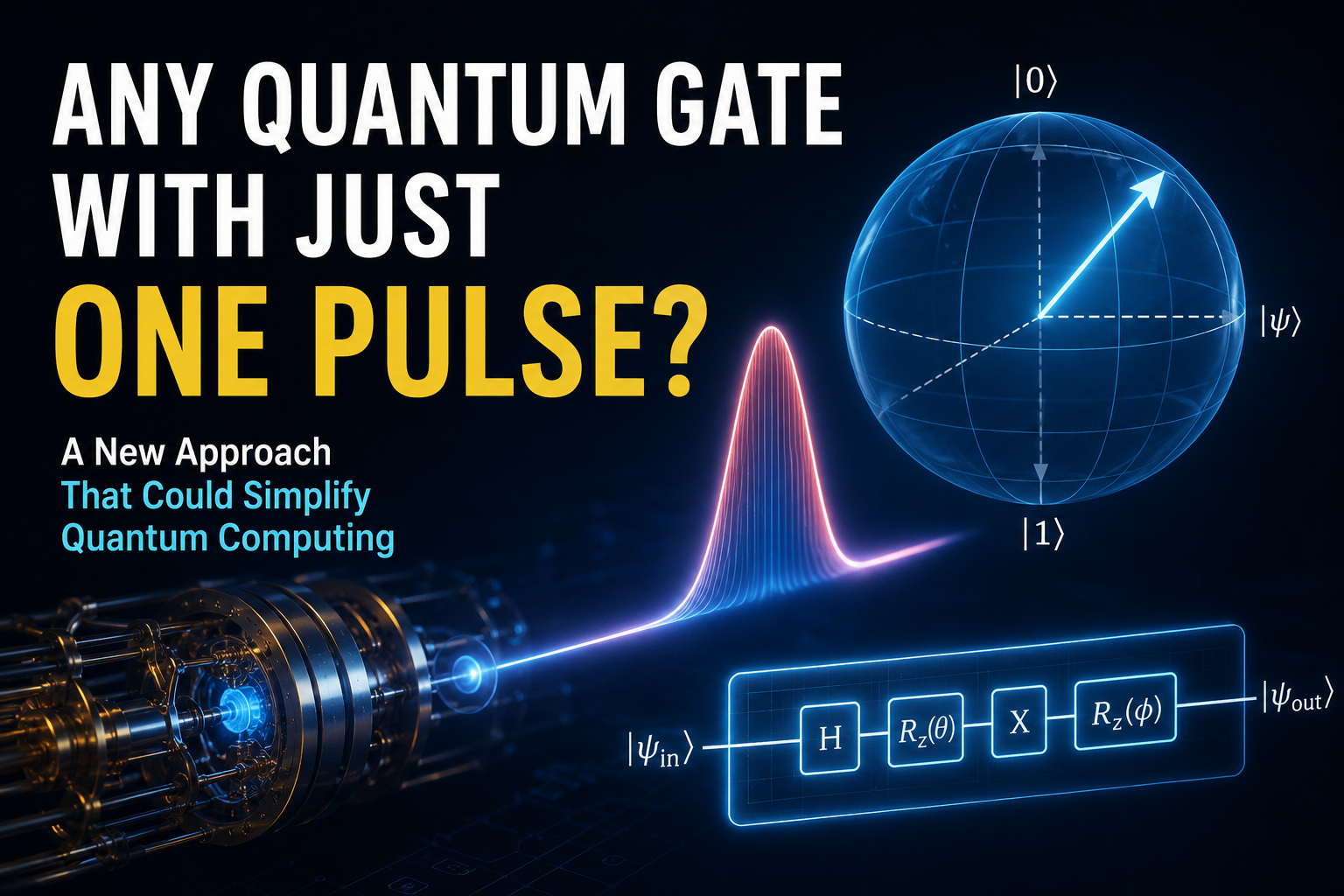
Can a Single Electromagnetic Pulse Replace an Entire Sequence of Quantum Control Pulses?
Researchers have developed an analytical framework that enables any single-qubit quantum gate to be implemented using a single engineered electromagnetic pulse. By applying reverse engineering, the method replaces complex pulse sequences with one continuously modulated control field, achieving gate fidelities approaching 99.999%.
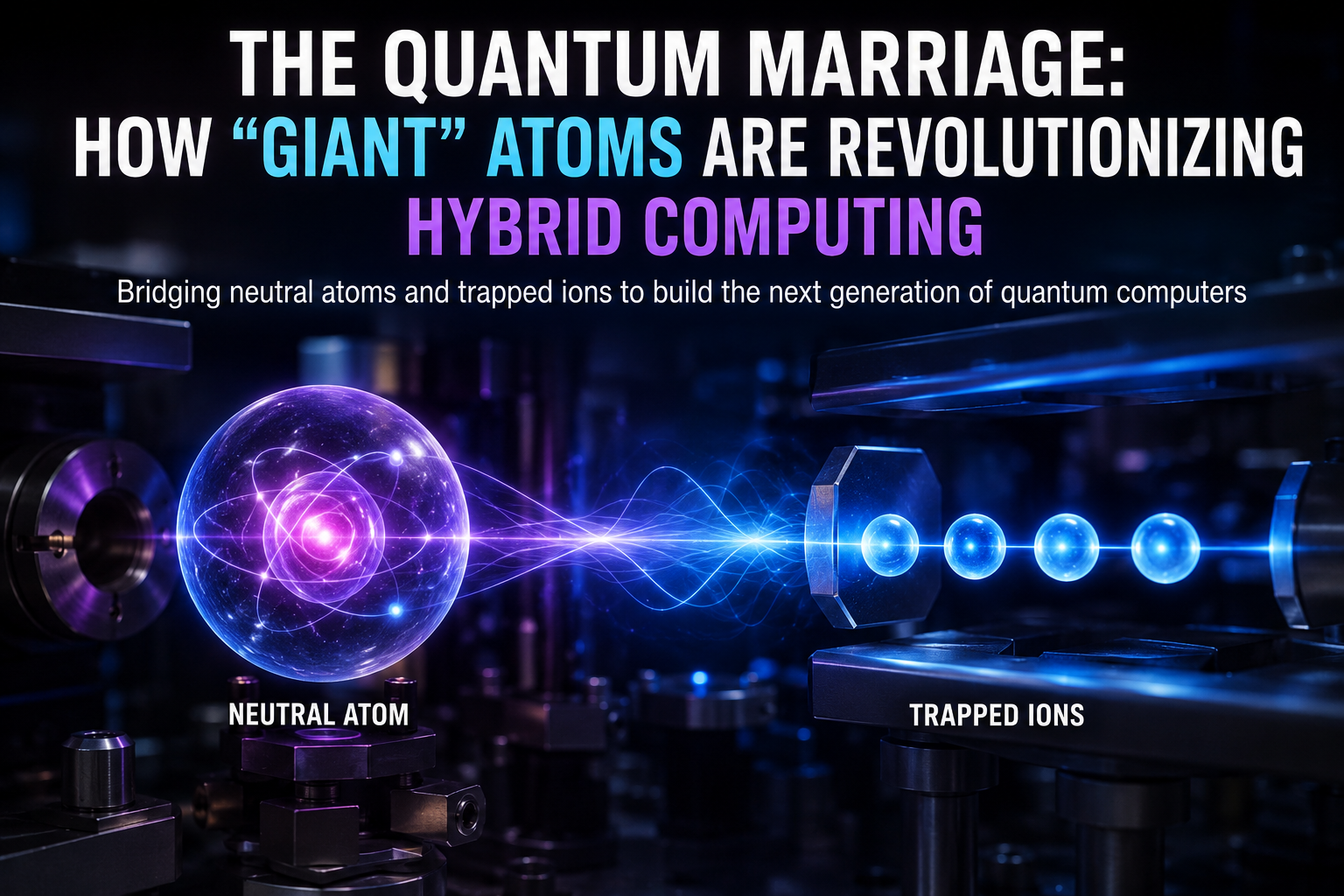
The Quantum Marriage: How Giant Atoms Are Revolutionizing Hybrid Quantum Computing
Researchers have proposed a hybrid quantum architecture that connects neutral atoms and trapped ions using Rydberg atoms. The approach combines the scalability of neutral-atom quantum processors with the exceptional precision of trapped-ion systems, opening a promising path toward more powerful and scalable quantum computers.
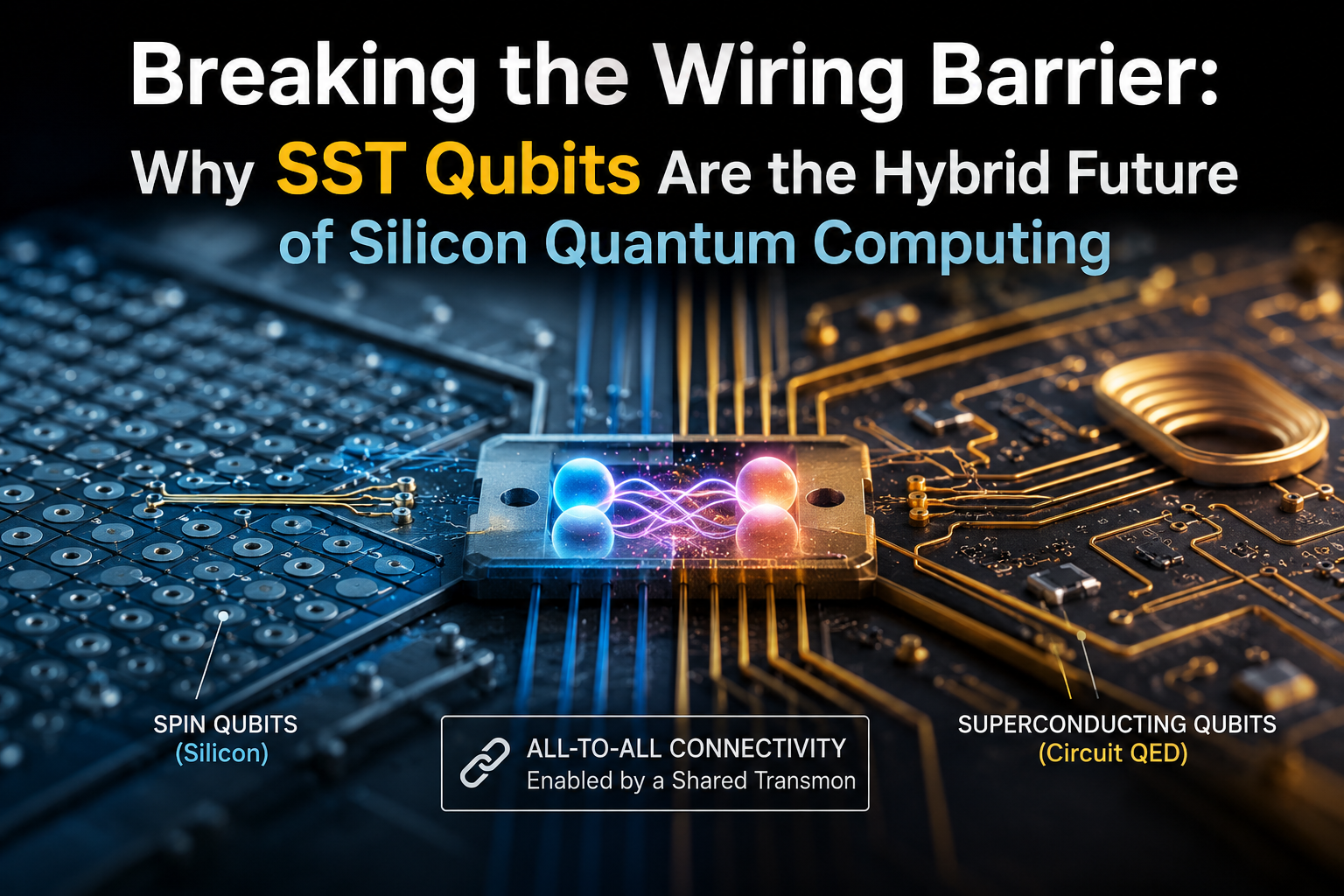
Can Silicon Unlock the Future of Million-Qubit Quantum Computers?
A new hybrid quantum architecture called the Superconducting Singlet-Triplet Qubit (SST Qubit) combines silicon spin qubits with superconducting circuits to address some of the biggest challenges in scaling quantum computers, including connectivity, wiring complexity, and quantum control.
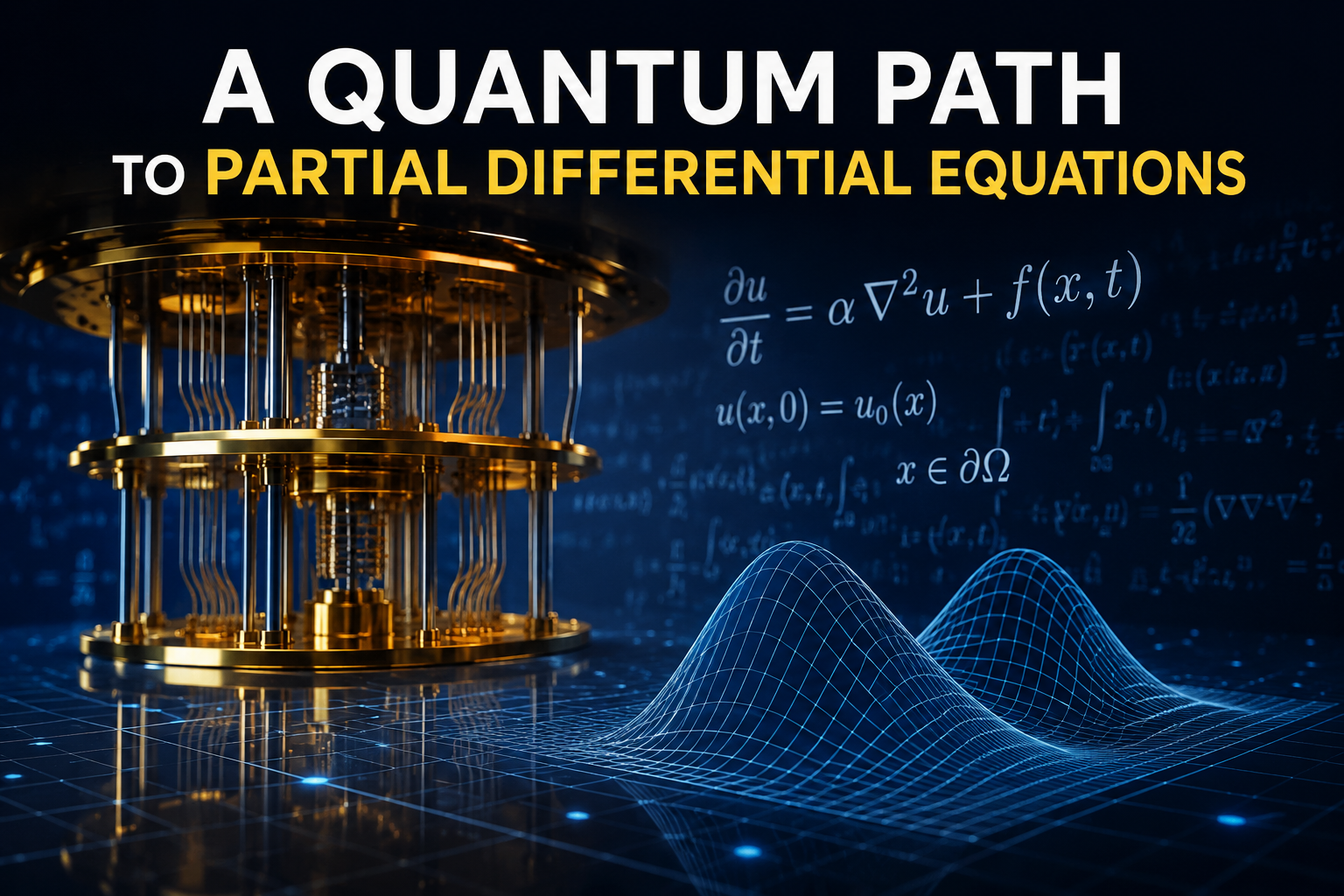
Can Quantum Computing Transform How We Solve Partial Differential Equations?
A comprehensive look at how quantum computing could accelerate the solution of partial differential equations, the mathematical foundation of scientific simulation across engineering, physics, climate science, and many other fields.
Can Black Holes Reshape Quantum Information?
A new study reveals how black holes and Hawking radiation reorganize quantum information, showing that the strongest quantum effects occur in the quantum atmosphere rather than at the event horizon.
Can One Mathematical Model Describe All Quantum Phenomena?
A new mathematical proof shows that no finite level of the NPA Hierarchy can fully characterize the complete Quantum Set, even in the simplest Bell scenario. The result reshapes our understanding of quantum correlations and the mathematical foundations of quantum mechanics.
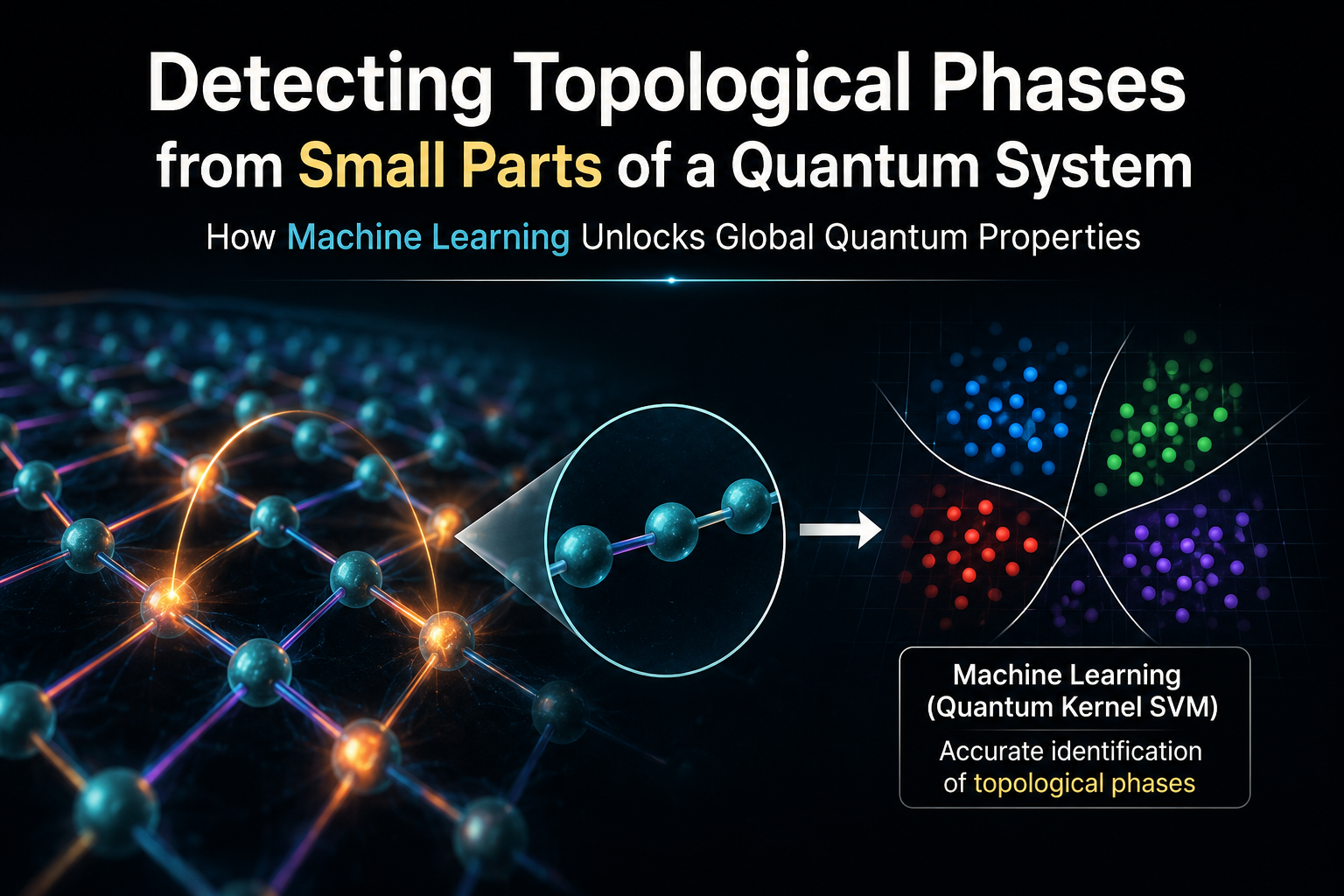
Can Artificial Intelligence Detect Topological Quantum Phases from Just a Few Particles?
Researchers demonstrate that machine learning can identify topological quantum phases using measurements from only a few particles instead of an entire quantum system, potentially simplifying future quantum experiments.
Why Quantum Computers Need a New Engineering Framework
As quantum technologies become increasingly complex, researchers propose a new engineering framework called QSysMM to ensure that physics, hardware, software, and systems models remain synchronized, physically accurate, and reliable throughout the development of quantum systems.
Could Quantum Computers Process Information in a Completely Different Way?
A new theoretical framework explores how information, memory, and global access could emerge inside fully quantum systems without copying data, offering a fresh perspective on quantum information processing rather than claiming quantum computers are conscious.
Can Quantum Computing Finally Solve One of Plasma Physics' Greatest Challenges?
A new quantum algorithm offers a promising approach to simulating weakly nonlinear plasma, potentially accelerating research in fusion energy, astrophysics, and computational physics.
Can Objects Visible Under a Microscope Behave According to Quantum Mechanics?
Researchers propose a new method for observing quantum interference in levitated superconducting microparticles, bringing scientists closer to understanding where the quantum world ends and the classical world begins.